
The suffering issue of problems with dying Bose-end stages has a
This is the first time we have been able to get a decisive turn. In the past few days, it's me
managed to bring several end stages to life, without
I had to change the Bose-ICs !!!
In the previous attempts to repair an already "flattening" Bose amplifier I had limited myself to changing only all Elkos on the board.
This measure has the success that the final stages no longer flutter but are far too small in their reinforcement. Since the sound was otherwise impeccable, I did not have an exchange of transistors - until a few days ago. By chance I fell into the hands of a defective power stage in the basement in the evening and then the thought came to me just to change the power stage transistors. So I ordered a bag full of Elkos and MOSFETs from Reichelt. Then wait until the parts come and the day before yesterday it was
then so far: old transistors out, new ones in - jaaaaaaaaaaaaaaaaaaaaaaaaaaaaaaaaaaaaaaaaaaaaaaaaaaaaaaaaaaaaaaaaaaaaaaaaaaaaaaaaaaaaaaaaaaaaaaaaaaaaaaaaaaaaaaaaaaaaaaaaaaaaaaaaaaaaaaaaaaaaaaaaaaaaaaaaaaaaaaaaaaaaaaaaaaaaaaaaaaaaaaaaaaaaaaaaaaaaaaaaaaaaaaaaaaaaaaaaaaaaaaaaaaaaaaaaaaaaaaaaaa
Since then, the final stage sounds like it's just fallen off the band. Crazy!
Well, you might have come up with that sooner. Normally, transistors are so familiar that if they fail, they like to go through it, that is. have a short circuit or, in very rare cases, also become high-impaired.
In the case of the Bose amplifiers, it is obvious that the transistors' web resistance increases and thus the gain of the amplifier decreases. But this effect has no qualitative effects on the music signal, at least none that I can perceive with the mere ear.
So, before all the Bose Flatter End Stage Victims start running to buy spare parts for the End Stages, I want to get rid of one more thing. When you see the designation of the elcos in the Bose power amplifiers, you quickly realize that all capacitors are designed for temperatures up to 105° Celsius. This also has its purpose and I can only urgently advise anyone to take the repair capacitors that are designed for the same temperature range. It certainly makes no sense to take a few cent capacitors for the custom range (up to 85° Celsius). Each of you has certainly left your car in the sun in the summer, and everyone can imagine which temperatures can then develop under direct sunlight, especially on the rear shelf. High temperatures and large loading and loading. Discharge currents increase the aging process at Elkos.
As a replacement for the amplifier transistors I have taken the IRFZ24 from the International Rectifier company. This is also recommended on the Internet on some sites already mentioned here. The problem here is that the case of the original transitors is fully insulated in the Bose power stages, the case of the IRFZ24 is unfortunately a simple TO220 without insulation. Therefore, the transisors must be isolated. In addition, you will probably get problems if you want to get Elkos of capacity 820 μF. This is because these capacitors probably have buffering function, e.g. for bootstrap or similar, I have replaced them with Elkos of capacity 1000 μF.
The repair of the power stages itself is not so bad. The main work is to remove the casting material from the coils and capacitors. For this purpose, I recommend that you heat the casting compound with a hot air dryer. Then you get the casting away easier. When removing this mass, however, it is essential to ensure that the ICs on the board are not damaged, neither mechanically nor thermally.
When the casting is off, you can start soldering out the Elkos and the MOSFETs. To remove the soldering tin, a desoldering pump is recommended. Dissolving litz is less suitable. If all components are soldered, the board should be cleaned so that the soldering is better when the new components are installed. CONTACT_WL is particularly suitable for this purpose. Then only the new components have to be soldered.
The cost of the spare parts, including transistors, is less than 5 euros.
Greetings from Kiel
Maadin
Bose - And in the end I defeated you !!!
5 posts · 978 views · started
Hallo Martin,
ist ja wirklich super.
Nur dachte ich, du hättest die in Mailinglisten und Internetseiten angegebenen IRFZ24-Transistoren bereits in der Vergangenheit getauscht?
Maik
ist ja wirklich super.
Nur dachte ich, du hättest die in Mailinglisten und Internetseiten angegebenen IRFZ24-Transistoren bereits in der Vergangenheit getauscht?
Maik
Das habe ich nicht wirklich.
Ich habe mal von einer intakten Endstufe zu Testzwecken zwei Transistoren
ausgebaut und in eine defekte eingebaut. Bei dieser Aktion hätte ich dann besser
alle Transistoren tauschen sollen, denn ich hatte keinene Erfolg. Zu der Zeit, als
ich diesen Versuch unternommen hatte, gab es auch noch keine Infos über Ersatztypen für die MOSFETs auf den Verstärkerplatinen.
Tja, ohne Arme keine Kekse ;-)))
Gruß
Martin
Ich habe mal von einer intakten Endstufe zu Testzwecken zwei Transistoren
ausgebaut und in eine defekte eingebaut. Bei dieser Aktion hätte ich dann besser
alle Transistoren tauschen sollen, denn ich hatte keinene Erfolg. Zu der Zeit, als
ich diesen Versuch unternommen hatte, gab es auch noch keine Infos über Ersatztypen für die MOSFETs auf den Verstärkerplatinen.
Tja, ohne Arme keine Kekse ;-)))
Gruß
Martin
Na das ist mal ne super Nachricht , ich glaube ich schicke dir mal nen LS zum reparieren wenn du Zeit und lust hast!!??
Mfg Björn
Mfg Björn

Hi Ihr und Maadin,
da ich heute Zeit hatte ,die ersten von Martin (Dr.Mabose ) bereits instandgesetzten Endstufen wieder ihren ursprünglichem Platz in meinem Langen einzubauen ,hier die Erfolgsmeldung.
Vorher:
1xgeflatter,2xziemlich Leise (dafür bei Lautstärke Off,ziemlich lautes rauschen),2xTop Funktion (ich weiß es sind 5 Lautsprecher,einen hatte ich schon nachgekauft und ausgewechselt).
Nachher:
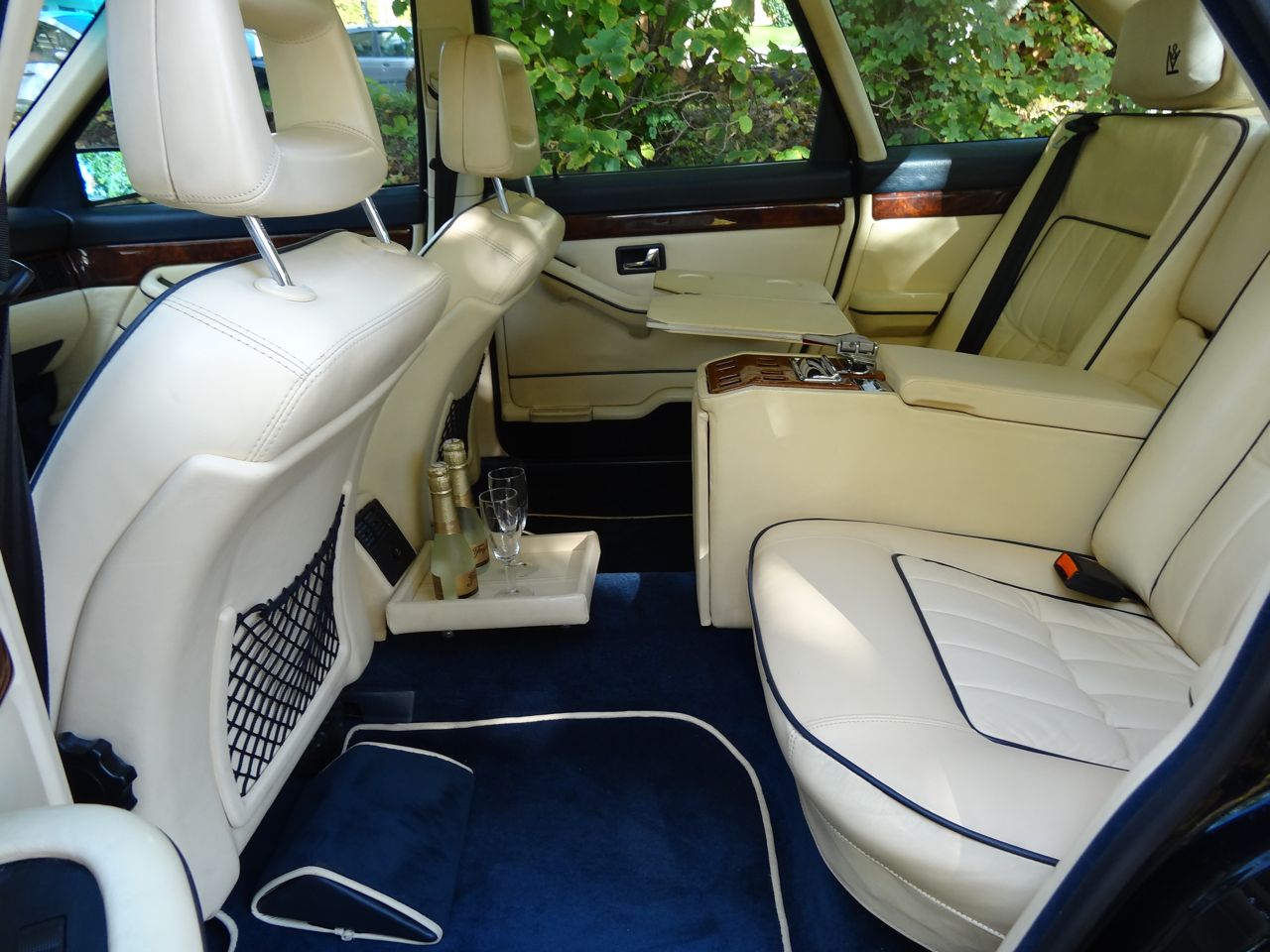
Alle Lautsprecher volle Funktion,keinerlei negative Eindrücke (außer das meine Frau meckert,warum ich auf dem hinteren Sitz sitze und nicht mehr aussteigen will).
Maadin hat vorsichtshalber alle Lautsprecher überholt, mit vollem Erfolg.
Sein Einsatz und die Beharrlichkeit die defekten Teile zu suchen und auszutauschen ,ist unbezahlbar,nochmal meinen allerherzlichsten Dank und ich wünsche euch eine schöne Hochzeitsreise (wink mit dem Zaunpfahl !!).
So, nun setze ich mich wieder ins Auto.
Bis dann.
da ich heute Zeit hatte ,die ersten von Martin (Dr.Mabose ) bereits instandgesetzten Endstufen wieder ihren ursprünglichem Platz in meinem Langen einzubauen ,hier die Erfolgsmeldung.
Vorher:
1xgeflatter,2xziemlich Leise (dafür bei Lautstärke Off,ziemlich lautes rauschen),2xTop Funktion (ich weiß es sind 5 Lautsprecher,einen hatte ich schon nachgekauft und ausgewechselt).
Nachher:
Alle Lautsprecher volle Funktion,keinerlei negative Eindrücke (außer das meine Frau meckert,warum ich auf dem hinteren Sitz sitze und nicht mehr aussteigen will).
Maadin hat vorsichtshalber alle Lautsprecher überholt, mit vollem Erfolg.
Sein Einsatz und die Beharrlichkeit die defekten Teile zu suchen und auszutauschen ,ist unbezahlbar,nochmal meinen allerherzlichsten Dank und ich wünsche euch eine schöne Hochzeitsreise (wink mit dem Zaunpfahl !!).
So, nun setze ich mich wieder ins Auto.
Bis dann.
Join the conversation, see photos and ask questions? Sign in with your forum account.
Sign in